Towards a new art of healing
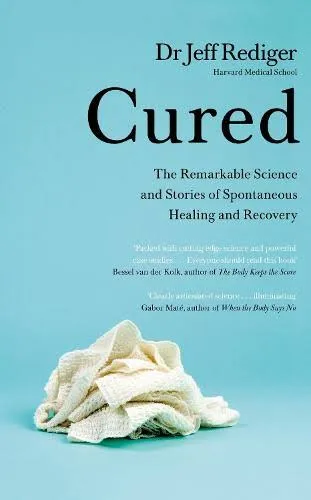
I have just finished Cured, by Dr Jeffrey Rediger. After a seventeen-year investigation into spontaneous remissions, he identifies four dimensions that seem to play a major role in our state of health.
A seventeen-year investigation
I have just finished Cured, by Dr Jeffrey Rediger.
After a 17-year investigation into people who experienced what medicine calls spontaneous remissions, he identifies four dimensions that seem to play a major role in our state of health:
- nutrition,
- the immune system,
- the stress response,
- identity.
A systemic approach
What I particularly appreciate in his approach is that he does not claim to have found a universal recipe.
Quite the opposite.
He starts from hundreds of singular stories and seeks to understand which patterns emerge when they are observed in depth.
A deeply systemic approach, one that speaks to me a great deal.
He also writes a sentence that struck me particularly:
“Remissions are probably not without cause. They are without a cause we yet understand.”
Identity, at the heart of the system
Among the four dimensions, identity is the one that challenged me the most.
Jeff Rediger explains that we very often operate from what neuroscience calls the Default Mode Network (DMN): that brain network which constantly narrates our story, sustains our beliefs about ourselves, feeds our fears, our habits… and, ultimately, our identity.
In other words, we do not only react to reality.
We also react to the story we tell ourselves about that reality.
And sometimes, that story becomes stronger than reality itself.
When it sustains limiting thought patterns, it gradually cuts us off from our own power to act and to bend a life trajectory we sometimes believe is already written.
Cultivating, rather than following a method
I do not believe a universal method exists.
I do believe, however, that each person can learn to cultivate, day after day, a more favourable state of health.
Every human being is a unique ecosystem.
Life is infinitely vaster than what we are able to understand… and to measure, today.
A question that continues
For several months I have also been exploring another question:
To what extent do the systems we live in — family, educational, professional or health systems — shape the way we inhabit life, health… and our identity?