Regaining Discernment Amid Collective Tensions
In recent days, the images of the shops on rue Neuve in Brussels, their windows being covered with wooden boards, struck me.
Having had shops of my own, I fully understand the shopkeepers' caution. After the violence of 17 October, protecting one's team and one's business is entirely legitimate.
What made me pause is the message that this whole set of images sends to the world.
For my part, I received it as a rise in worry rather than as reassurance. It did not make me want to go into town.
I read in the press the account of a shop manager. Seeing her neighbours protect their windows, she did the same: if the others do it and she doesn't, she risks becoming the target.
I find this reasoning perfectly human. And it shows how, step by step, sensible individual decisions can add up to a picture that no one really chose. A whole street seems to be preparing for a confrontation.
When protecting ourselves also becomes a signal
A wooden board protects. It also says something.
To those passing by, to those who work there, to those thinking of coming into town. And perhaps to those looking for confrontation.
This message can reassure, worry, discourage. Sometimes, it can also stir up tensions.
A board can deter. Can it also, at times, be perceived as a challenge?
And what if, the next time, a thicker wall were needed? And then another?
The risk of further outbreaks exists, and no one can deny it. But the past is not a sentence to repeat itself. Between what happened yesterday and what might happen tomorrow, there is a multitude of possibilities. Appeasement, cooperation, a new situation.
By dint of wanting to prevent whatever could go wrong, do we not also risk preventing whatever could go well?
What horses taught me
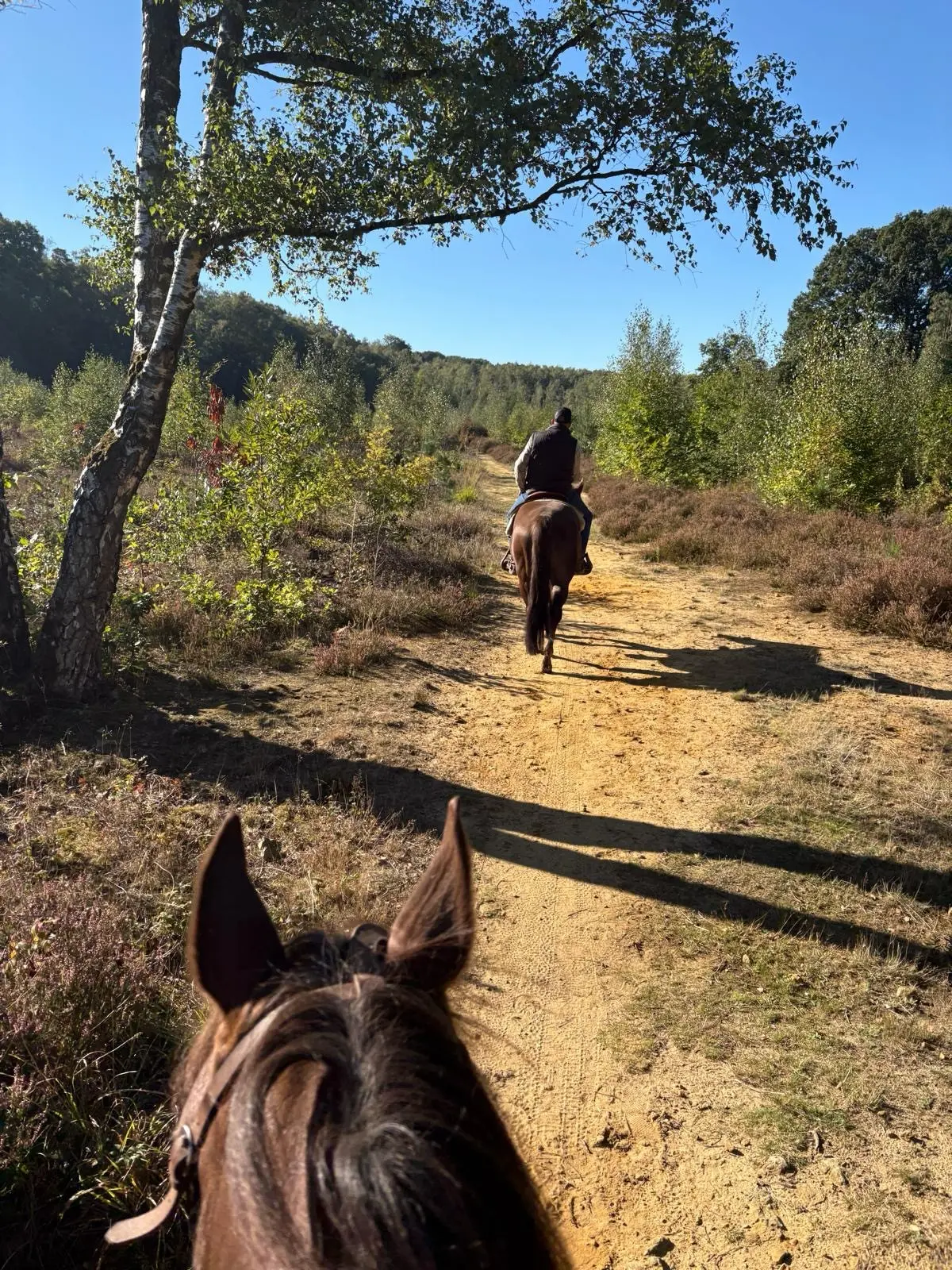
When I went riding with my mare Pippa, she would sometimes sense something I had not yet seen. A new object at the edge of the track, a sound, a movement in the distance.
She would become animated.
In a horse, the signs of excitement can look alike, whether it is curiosity, joy or worry.
When I did not know what she had seen, I would tense up in response, almost imperceptibly. My body would tighten, my breathing would change. "What has she seen?"
Pippa would feel my tension. She would become more animated still.
And, without anyone having wished it, off we went into a dynamic that kept growing.
My first reflex was to control her. I would tighten the reins, try to make her move forward. It was a power struggle.
Yet, facing a mare of six hundred kilos, a power struggle is lost in advance. Unless one resorts to coercion, which I did not want.
But when I spotted what had startled her, everything changed. I could stay calm, give her time to look, pass the object ten times to show her there was nothing to fear.
Knowing what we are looking at changes how we respond to it.
This phenomenon also makes me wonder about human relationships. We are living beings, sensitive to the emotions and behaviours of those around us. In groups, these reactions can spread and grow, among demonstrators as among those who anticipate their arrival, sometimes to the point of carrying everyone far beyond their initial intention.
Is it possible to stay attentive to what is real, without adding tension of our own?
Regaining the ability to choose
A shopkeeper can protect their window and stay open. Another may decide to close temporarily, accepting a limited loss rather than exposing themselves to heavier ones.
Neither of these responses is universally better.
Prevention is necessary. It is best when it remains proportionate, attentive both to real risks and to the effects our own precautions can produce.
What interests me is the ability to make a genuine trade-off, rather than copying what the neighbour does or letting fear decide alone.
Gentleness is not the opposite of firmness. It can even be a powerful expression of it, provided it is sincere.
De-escalating does not mean giving in or fading away. It means refusing to add violence to violence, while keeping the ability to set limits.
Taking part without necessarily joining in
In times of tension, we are often invited, sometimes summoned, to react, to express outrage, to choose a side. Social media amplify this pressure even more.
"We cannot stay silent." "We must rebel."
These calls sometimes express genuine moral demands. But must they become injunctions to show ourselves?
I can understand some demands expressed in the street without sharing them all, and without ever condoning violence.
Some choose to demonstrate, others to help, to talk or to mediate. Others still step back to observe, reflect, write. These forms of participation are not mutually exclusive.
Withdrawal is not necessarily indifference, any more than presence guarantees constructive engagement.
Perhaps discernment begins with respecting one's own limits. Recognising what we can contribute, without feeling obliged to take part in every battle.
With a presence that does not demand sacrifice. And enough inner freedom not to confuse engagement with confrontation.
From fruitful tensions to tensions that lead to deadlock
Not every tension is destructive.
Some reveal injustices, loosen frozen situations, open dialogues. Others lock everyone into their positions and reproduce what they claimed to fight.
It is not always easy to tell them apart in advance. A tension can even shift from one to the other.
The challenge is perhaps to regain enough discernment to recognise those that are fruitful, and not to contribute, despite ourselves, to turning them into deadlocks.
For calming is not stifling the conflict.
It is preserving the possibility that it leads to something other than a deadlock.