Where does the outside world end and where do we begin?
But what if this boundary were far less clear-cut than we imagine? The outside world does not mysteriously pass through our skin: it is perceived, interpreted, translated biologically. This is the thread I started to pull.
Neither fortress, nor sponge
We are made to adapt
I had already explored the concept of the exposome: the totality of the exposures we undergo over the course of our lives and the biological responses associated with them.
Then I came across another concept: allostasis.
Our body adapts constantly.
That is normal. It is even one of the characteristics of living things.
Faced with what changes around us, our brain, our nervous system, our hormones and our immune system continually adjust how they work.
But what happens when there is simply too much?
Too long.
Too often.
Too fast.
Bruce McEwen¹ worked extensively on this phenomenon. He spoke of allostatic load: the cumulative cost that adaptation can represent when our systems are solicited repeatedly or over prolonged periods.
So the problem is not that we adapt.
It may begin when adaptation itself becomes a burden.
When the social world reaches our cells
This is where the work of Steven Cole² particularly interested me.
His research shows that certain social experiences — notably isolation, the feeling of threat, or certain forms of prolonged adversity — are associated with changes in the expression of certain genes in immune cells.
Cole is not talking here about a modification of the sequence of our DNA, but about the activity of certain genes: some may be more or less expressed depending on the signals received by the body.
This work borders on epigenetics without merging with it. I will come back to this.
But one idea already interests me: the genes we inherit do not tell the whole story on their own.
The brain perceives and interprets a situation.
Nerve and hormonal pathways transmit signals.
These signals can reach the cells and take part in regulating the expression of certain genes.
The outside world therefore does not mysteriously pass through our skin.
It is perceived.
Interpreted.
Translated biologically.
And perhaps we consciously perceive only part of the information our body responds to.
How far does this sensitivity go?
I don't know.
No one is outside
We are obviously not all exposed to the same things, nor with the same intensity. Certain social and material conditions can considerably increase some exposures and reduce the possibilities of escaping them.
But that is not my angle here.
My unit of observation is the human being.
Not a social, political or ideological category.
The human being as a living organism, in permanent relationship with its environment in the broadest sense — including with the other forms of life.
At that level, no one is outside.
Air, food, pollutants, noise, light, sleep, life rhythms, relationships, conflicts, solitude, digital demands, information…
Taken separately, each of these elements tells a different story.
But our body, for its part, must integrate the whole.
What if there was simply too much?
The latest projections from the World Health Organization and the International Agency for Research on Cancer announce nearly 35 million new cancer cases per year worldwide by 2050, compared with about 20.6 million today.³
I am not trying here to offer a new explanation of cancer.
These figures simply raise a question for me:
under what conditions are we asking our bodies today to live and adapt?
Our body has extraordinary capacities for adaptation.
But our contemporary environment multiplies the demands.
Some are visible.
Others far less so.
Some are one-off.
Others almost permanent.
And some combine with one another.
What happens when our capacity to integrate all this is continually solicited?
I don't know.
Science allows me to follow part of the thread.
It already shows that certain characteristics of our environment can produce measurable biological responses, down to the functioning of certain cells.
It does not allow me to claim that the “chaos of the world” would literally become a cellular chaos.
This is where science stops for now, and where my intuition continues.
Remaining sensitive without absorbing everything
For a long time, I lived with many protections.
Today I imagine them as the walls of a fortress, built gradually so as not to feel certain things too much.
These protections had their function.
But when we protect ourselves from what hurts, we do not always choose precisely what we keep out.
We can also feel less of what nourishes, connects, delights or gives meaning.
I have gradually removed some of these layers.
And another question appeared:
how to remain open to the world without absorbing everything?
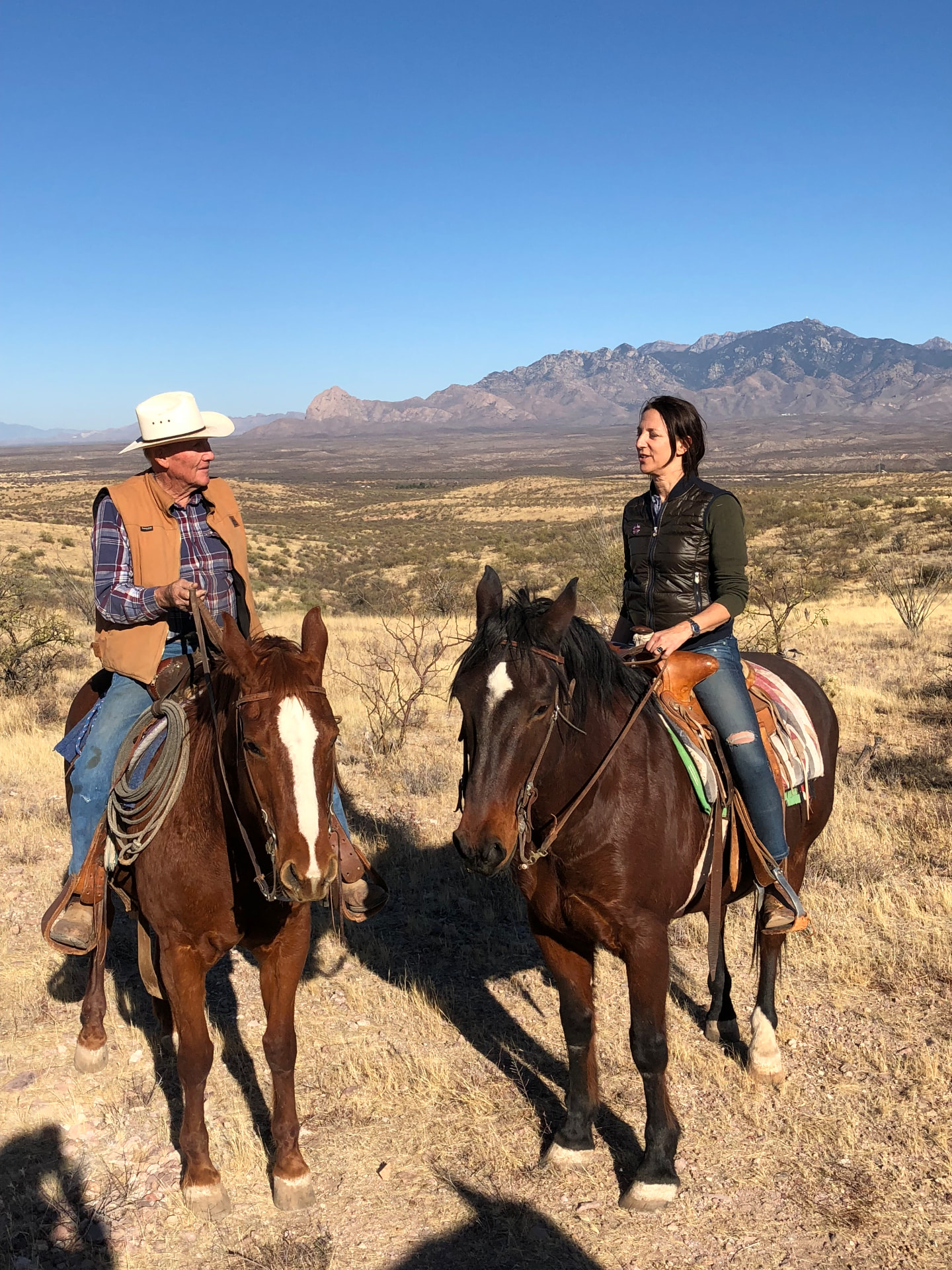
This is where horses come back to me.
More particularly wild horses, or those living in conditions that still allow them to express their natural behaviours widely.
Their way of being in relationship with their environment led me to look at ours differently.
They cannot cut themselves off from what surrounds them.
They perceive the movements of the herd, the smells, the wind, the presence of other animals. Their environment itself changes: heat, drought, the availability of water and food, smoke, fires, changes to the territory.
Their sensitivity to the environment is a condition of their existence.
But a piece of information is not necessarily a danger.
I draw no lesson from this about what humans should do.
I observe another way for the living to be in relationship with the living.
Without standing above.
And this opens a question for me:
how to perceive more without being in a continual state of alert?
What does this change in the real?
This is ultimately where this exploration truly interests me.
An intuition can be exciting.
If it never changes anything in the real, it remains an idea.
What do I continually let enter my attention?
What rhythms do I impose on myself?
What relationships keep me in a state of alert?
What do I react to as if it were a danger, when it may simply be information?
It is not about controlling more. It is perhaps about perceiving, integrating and discerning better.
I cannot change the quality of the air alone, slow down technology or prevent the conflicts of the world. But I can act on the conditions I take part in — my rhythms, my relationships, my way of informing myself and of treating the living around me.
These are small things. They will not change the world on their own. But they are not nothing.
Neither fortress. Nor sponge.
Living beings, in relationship with the living.
Notes
1. Bruce S. McEwen (1938–2020) — neuroendocrinologist at Rockefeller University in New York. His work focused in particular on the effects of stress on the brain and the body, and on the concept of allostatic load.
2. Steven W. Cole — professor of medicine, psychiatry and biobehavioral sciences at UCLA. His research focuses in particular on the pathways through which the social environment can influence the regulation of gene expression.
3. WHO / IARC, Global Status Report on Cancer 2026 — the latest global estimates report about 20.6 million new cancer cases per year. Nearly 35 million are projected by 2050. This projection notably reflects demographic developments and changes in risk factors.
This reflection belongs to a broader inquiry — Let's search together.
Also worth reading: Let's search together · What do we really inherit? · What allows the new to emerge?